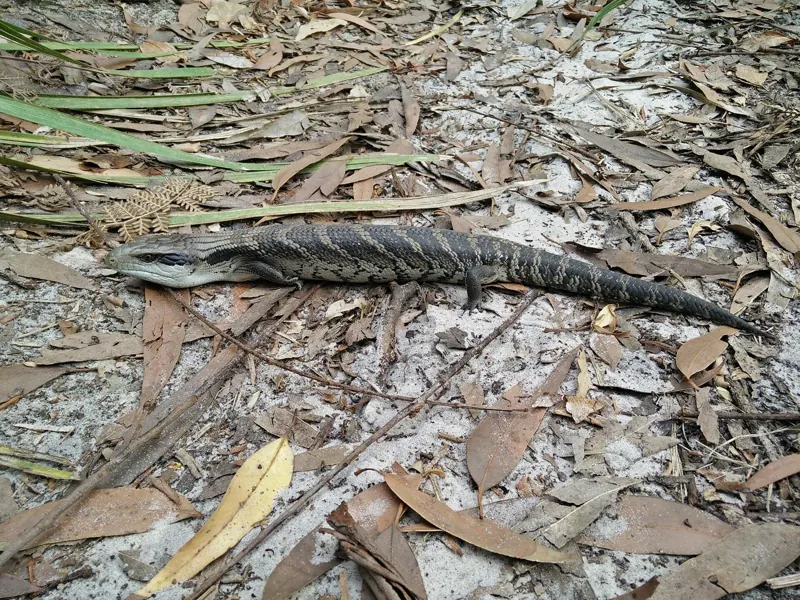

If you have ever met a skink in a pet shop, a zoo or an Australian back garden, there is a fair chance it was one of these. Eastern blue-tongues are broad, short-legged and unhurried, with grey-silver bands across the back and a head that looks slightly too big for the body. They are not fast and they do not need to be.
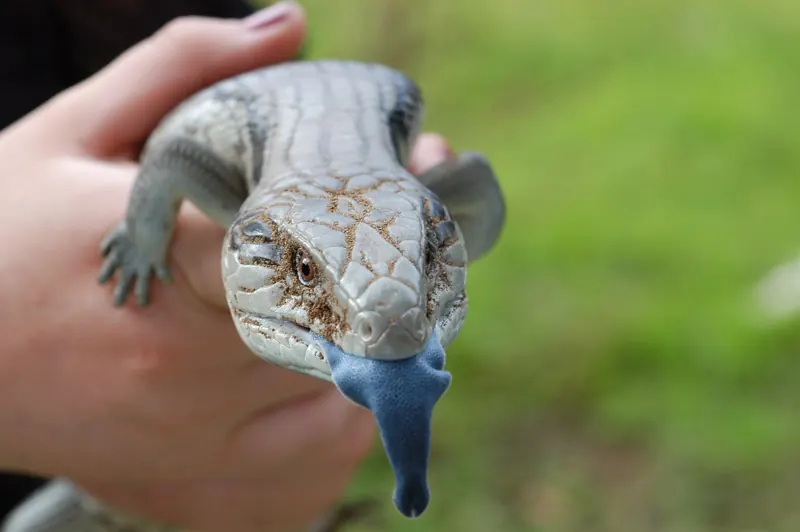
Their defence is theatre. A threatened blue-tongue puffs up, hisses and opens its mouth to show a vivid cobalt tongue against a pink mouth. Research on the northern subspecies of the same species (T. s. intermedia) found the rear of the tongue is about twice as bright in ultraviolet as the tip, which birds and some other predators can see, and that the display comes in the final stage of an attack, as a startling surprise.
In Sydney and Brisbane suburbs they are a gardener’s ally, working through snails and slugs. Their biggest modern dangers are dogs, cats, lawnmowers and slug pellets, which poison the very snails they eat.

← Southern slider · All species · Shingleback →